
Technical Textiles at LITAC
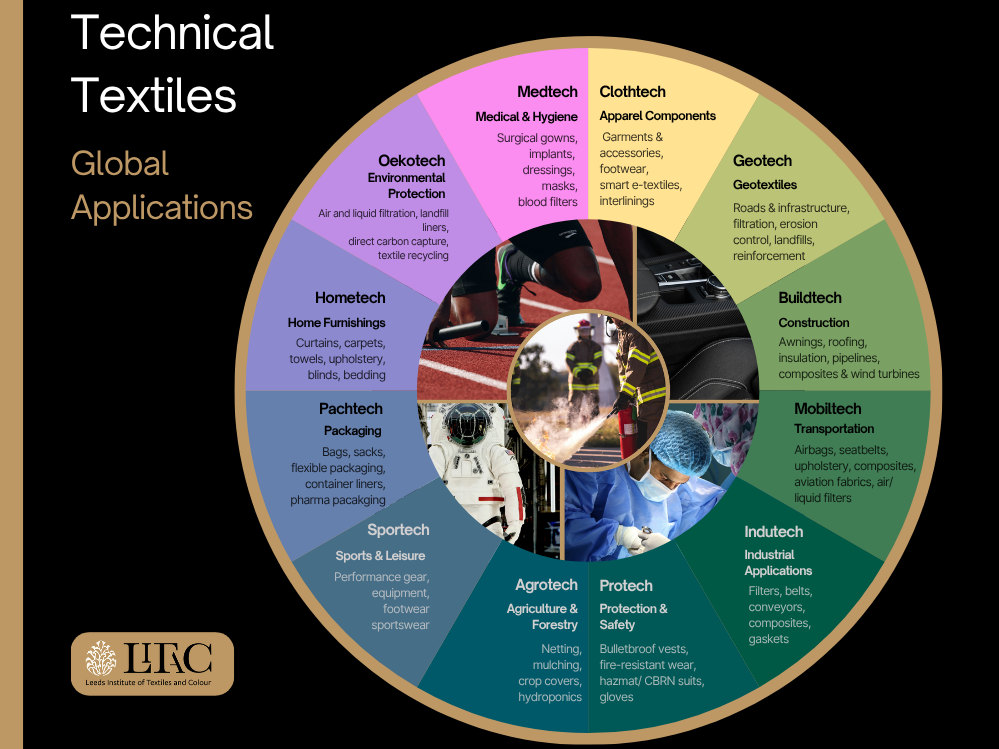
LITAC’s technical textile research spans the full spectrum, from advanced materials and manufacturing technologies to engineering product performance for diverse applications. This includes research in healthcare materials, filtration, protective equipment and smart textile technologies. This is an interdisciplinary research field, involving collaborative expertise in textile engineering, polymer science, chemistry, biomaterials, robotics, mechanical engineering, electronic and electrical engineering as well as various branches of manufacturing. We focus on applied research from the engineering design of materials through to small-scale prototype manufacture, testing and characterisation. Our extensive laboratory facilities support fibre and yarn production, fabric manufacturing, integration of electronics, wet and dry textile processing and advanced characterisation.
Advanced Healthcare Materials
This research is conducted by the Clothworkers’ Centre for Textile Materials Innovation for Healthcare (CCTMIH) within LITAC, where the focus is on the development of new biomaterials, compatible manufacturing systems and smart, multifunctional materials. New materials and drop-in chemistries are converted into high-performance multifunctional fibres, fabrics and coatings for a variety of purposes, and electronics incorporated with textile materials provide diagnostic or monitoring functions in wearable devices. Current research focuses on hydrogels and fibres for chronic wound care, regenerative medicine, smart therapeutic polymers, minimally invasive soft robotic fibres, and wearable devices for health and well-being monitoring, including loneliness, neurodivergence and early-stage detection of disease.
High-Performance Protective Textiles
The research focuses protective clothing systems designed for extreme and hostile environments. This includes work on thermophysical comfort, moisture vapour management, thermal insulation, high temperature protection, impact protection and the engineering design of fibrous assemblies intended for specific product applications. The research also involves characterisation and modelling of liquid wetting and wicking, fluid-fibre-particle interactions, as well as fluid transport and heat transfer in fibrous materials. The engineering of sustainable technical textile materials and their life cycle assessment is a further area of expertise.
Smart Composites & Textiles
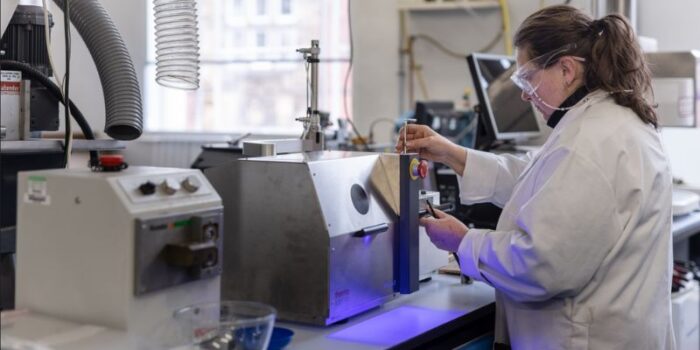
This area focuses on engineering textile structures containing embedded electronics manufactured by methods such as printing, weaving, embroidery, coating and other textile manufacturing processes. The research is directed at engineering prototype devices for a variety of use cases in aerospace, space, automotive, wind and hydrogen energy generation. Energy harvesting in textile materials, structural and health monitoring as well as the repair of fibre-reinforced composite materials are among the areas of interest. In addition to wearable monitoring technologies for humans, miniature wearable devices are also being engineered for wildlife, farming and aquaculture monitoring.
Filtration
Research in air/gas and liquid filter media focuses on the development of nonwoven porous fabric structures capable of balancing filtration efficiency and pressure drop effectively. This work covers surface, depth, cake and crossflow filtration applications. Other research includes optimisation of liquid-liquid separation processes, including oil and water separation.
Advanced Textile Manufacturing
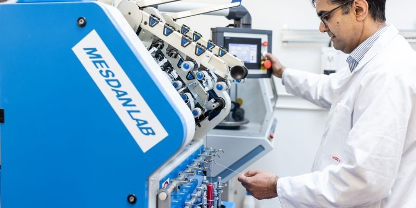
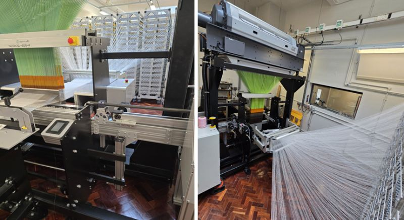
The research is supported by comprehensive fibre-to-finished fabric manufacturing facilities, including but not limited to chemical formulation, fibre extrusion, yarn production, weaving (including 3D), knitting, nonwovens (dry, wet and spunlaid web formation) and wet processing equipment, with extensive testing and characterisation capabilities. The research equipment and laboratories have been customised to maximise versatility, and enable processing of advanced materials, not yet in mainstream use, and the manufacture of small-scale samples for testing, modelling and analysis.