
Fashion at LITAC
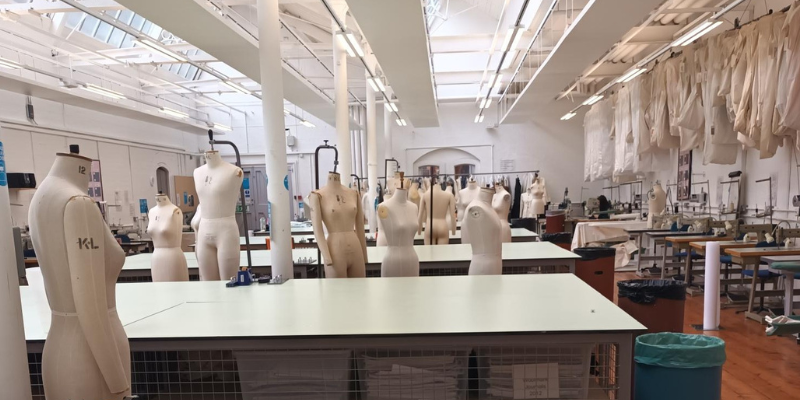
The fashion and textile design research supported by LITAC sits at the cutting edge of performance innovation, cultural practice, sustainability, and industry transformation. Our interdisciplinary research champions sustainable ecosystems, zero-waste design, post-consumer textile waste reduction, and innovations in manufacturing and garment durability.
Circular Fashion and Textiles Network Plus
The Circular Fashion and Textiles Network Plus unites three sub-networks to fast-track the transition towards sustainable and responsible fashion practices. As part of the UK Research and Innovation (UKRI) Circular Fashion and Textiles Programme, our Programme Co-ordination Team, which managed by LITAC, fosters collaboration and builds a shared knowledge base to drive industry-wide adoption of sustainable, circular business models. These sub-networks include:
- IMPACT+ (Northumbria University): Enhancing environmental impact data collection and analysis
- Back to Baselines in Circular Fashion and Textiles (University of Leeds): Building a comprehensive understanding of current sustainability performance
- Future Fibres Network+ (University of Exeter): Integrating environmental science into the core of fashion and textiles
This work supports UKRI’s £15 million Circular Fashion Programme, aiming to secure the UK’s global leadership in sustainable textile and garment manufacturing, circular business models, advanced recycling, technological innovation, green economic growth, and workforce resilience.
Future Fashion Factory
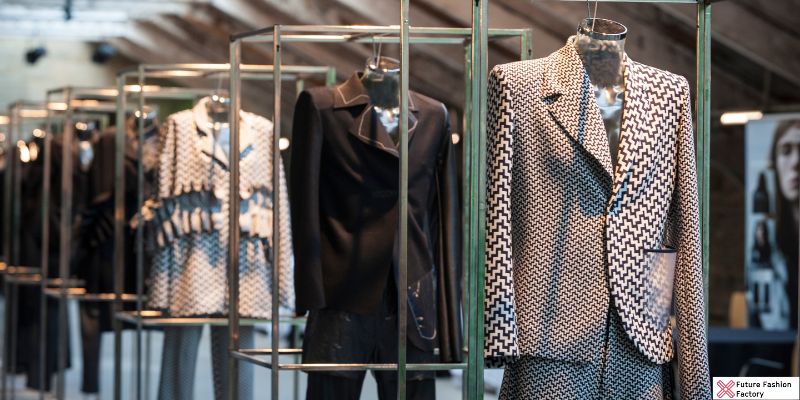
Future Fashion Factory (FFF), headquartered at the University of Leeds, is a major collaborative research partnership driving innovation across the fashion supply chain. Created through government investment worth over £5million, FFF focuses on advanced digital and textile technologies to transform competitiveness, productivity, and enable sustainable development. These research outputs have centred on:
- Designing the right product for the right customer at the right time, minimising waste
- Transitioning from linear to circular economies with improved recycling, reuse, and new business models
- Shortening product development cycles for greater agility
- Developing STEAM-based fashion designers who harness new textile and digital technologies
Fashion Archives and collections

Research is supported by extensive archives and collections, including:
- Yorkshire Fashion Archive: A unique repository of haute couture, fashion garments, and everyday clothing and accessories spanning over 100 years
- International Textile Collection (formerly ULITA): A global collection featuring Chinese Qing dynasty embroideries, Kashmiri shawls, Mediterranean and Near Eastern embroideries, block-printed cottons, Javanese batiks, Japanese textiles, West African weaves, European textile samples, and both natural and synthetic fibres
- M&S Company Archive: Over 71,000 items dating from 1884, including garments, artefacts, and comprehensive records chronicling the development of Marks & Spencer
By integrating innovation, sustainability, culture, and technology, our fashion and textile design research at Leeds sets new benchmarks for responsible, future-ready industry practices.
Recent Research Outputs
-
- Stansbie L; Almond K (2026) Performance Enhancing Design for Running Shoes: When Technology Wins. Fashion, Style and Popular Culture.
-
- Rainton S; Almond K (2025) Transitioning from STEM to STEAM engagement mechanisms: a Yorkshire-based creative industry collaborative ecosystem approach for fashion and textiles. City, Culture and Society, 43, pp. 100665.
-
- Almond K; Simpson J (2025) What to wear to a contemporary UK funeral: The impact of cultural diversity on mourning dress. Clothing Cultures, 11, (1), pp. 39-63
-
- Almond K; Rainton S (2025) Future fashion factory: developing an ecosystem to support sustainable change. International Journal of Fashion Design, Technology and Education, 18, (1), pp. 134-146.
-
- Briggs-Goode A; Groves A; Almond K; Britt H (2025) Mapping the Archive: Investigating the Value of UK Higher Education Fashion and Textile Collections. Archiving Fashion x ILFR Print Journal.
-
- Titisari B; Sinha P (2025) A systematic review of natural colourants and trend forecasting practices for the textile and fashion industry. Coloration Technology.
-
- Sinha P; Dissanayke DGK; Abeysooriya RP; Bulathgama BHN (2022) Addressing post-consumer textile waste in developing economies. The Journal of The Textile Institute, 113, (9), pp. 1887-1907.
-
- Temel M; Scott E; Cain R; Johnson AA (2025) The impact of knitted linked seams on comfort and friction perception. Ergonomics, 68, (8), pp. 1222-1238.
- Guo Y; Morris KE; Sumner M; Taylor M (2025) A framework for measuring physical garment durability. Cleaner and Responsible Consumption, 16, pp. 100245.
- Andrew S (2023) Textile Design Theory in the Making by Elaine Igoe – book review. Journal of Textile Design Research and Practice, 11, (3), pp. 297-300.