
Textiles at LITAC
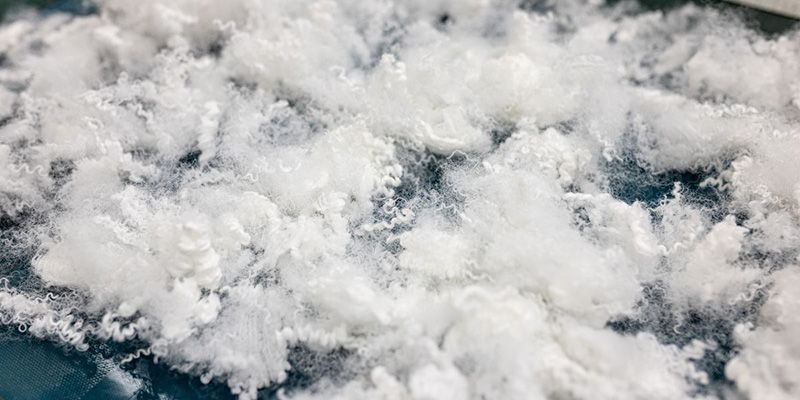
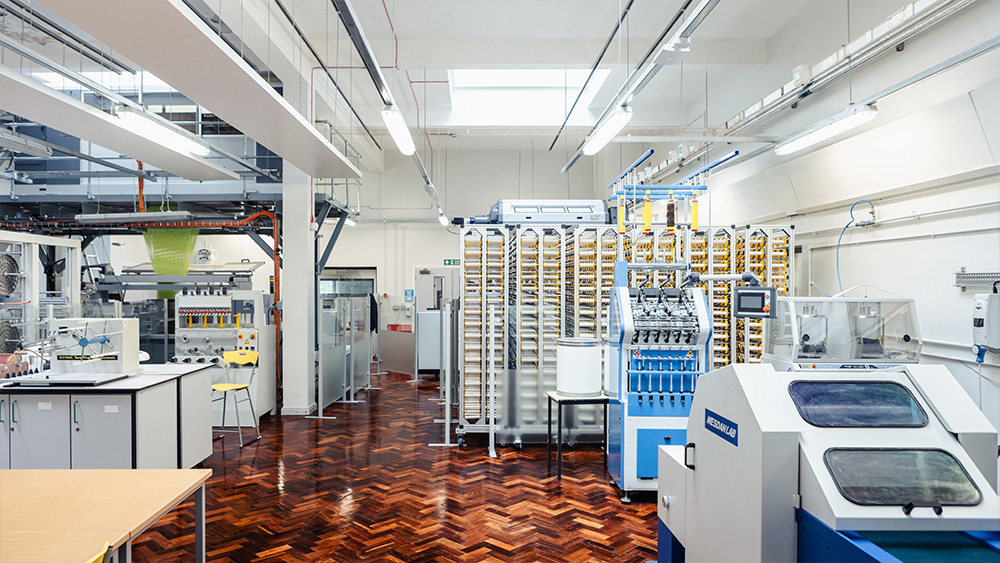
Extensive testing and characterisation facilities are available on-site in the School of Design, enabling textile materials and their properties to be comprehensively studied and quantified. State-of-the-art laboratories underpin world-leading research, including the testing and development of advanced materials. This expertise has contributed to the successful launch of University of Leeds spinout companies, specialising in areas such as nonwovens, water-saving textile technologies, and plant-based chemistry extraction for consumer applications.
Cutting-Edge Textile Research Areas
- Manufacturing of multifunctional polymers and fibres
- Innovative technologies and processes to promote circularity and prevent microplastic fibre release at source
- Advanced textile chemistry and laundry treatments to improve fabric longevity
- Development of medical textiles and healthcare fabrics
- Comprehensive characterisation and modelling of textile processes and materials, including process-structure-property relationships
Laboratory Capabilities
Extensively equipped laboratories facilitate experimental work across a broad spectrum:
- Textile chemistry
- Fibre extrusion
- Yarn spinning
- Weaving (including advanced 3D techniques)
- Knitting
- Nonwovens
- Dyeing and finishing
- Inkjet printing
- Textile testing and characterisation
To see these facilities in action, you can watch Professor Muhammed Tausif, expert in Sustainable Textile Manufacturing, introduce the Lab-scale Staple Yarn Spinning Line (YouTube) This line can process natural, regenerated, and synthetic staple fibres.
Microplastics and Fragmented Fibre Research
LITAC, in collaboration with the School of Design, leads innovative research into fragmented fibres, the microplastics released from textiles during manufacturing, use, and disposal. As textile-derived microplastics are now found globally, from deep-sea environments to polar regions, our research focuses on understanding and reducing fibre shedding to lessen environmental harm.
This cross-faculty initiative brings together experts from the Schools of Design, Geography, and Mechanical Engineering. This research investigates the mechanisms behind fibre release, the impact of textile structure and processing, and the behaviour of fragmented fibres in aquatic environments. By integrating textile technology, tribology, environmental science, and modelling, the University of Leeds is pioneering sustainable product design and manufacturing.
Building on a major EPSRC-funded programme, our ongoing efforts include experimental testing, computational modelling, and interdisciplinary collaboration. These partnerships underpin advances in measurement methods, knowledge sharing, and the development of lower-shedding textile solutions.
Circular Textiles and the AUTOLOOP Project
LITAC is a key contributor to AUTOLOOP, a leading European initiative focused on next-generation textile recycling systems. Led at Leeds by Professor Muhammad Tausif, alongside Professors Stephen Russell and Ningtao Mao, AUTOLOOP is developing scalable solutions to advance the circular textile economy.
According to a McKinsey report, less than 1% of textile waste in North-West Europe was fibre-to-fibre recycled as of 2022. AUTOLOOP aims to transform this by introducing:
- AI-enabled automated sorting
- Advanced chemical recycling for non-rewearable textiles
- Additive tracing for reliable material identification
- A Textile Data Hub compatible with the EU Digital Product Passport
These innovations will be validated from Technology Readiness Level (TRL) 3 to TRL 5, demonstrating their potential in real-world settings. By 2050, AUTOLOOP aims to enable large-scale, high-purity material recovery for both cellulosic and synthetic fibres, significantly reducing environmental impact and supporting EU circular textile objectives.
Pilot facilities will support process refinement and commercial deployment, with research, industry, and technology partners across Europe driving innovation and future scale-up.
Through its fibre science, recycling technology, and sustainable manufacturing expertise, LITAC ensures AUTOLOOP’s research is robust and industry-aligned, underpinning a sustainable, resilient, and circular textile sector.
Polymer Science and Material Innovation
LITAC’s polymer chemistry research focuses on the design and characterisation of monomers and macromolecules to create functional polymers and materials tailored to specific applications. Key areas include:
- Development of novel monomers for controlled polymerisation, yielding multifunctional polymers and renewable fibre-forming materials
- Creation of biodegradable materials, multifunctional fibres, and flame-retardant textiles for extreme environments
- Synthesis of multifunctional hydrogels and fibres for biomaterials, filament-based soft robotics, and diagnostic/theranostic medical materials
- Surface coatings: polymer synthesis and conversion, rheological properties, migration phenomena, ageing, controlled delivery, mechanical properties, and end-of-life strategies
- Printed electronics: synthesis of high-performance semiconductors, conductive and dielectric inks, medical diagnostic sensors, and ultrathin lithium-ion batteries
This broad research portfolio ensures LITAC remains at the forefront of innovative textile and polymer science, driving sustainable solutions and supporting the transition to a circular, low-impact textile industry.
Centres of Excellence
Our research is supported by dedicated centres with extensively equipped specialist facilities
3D Weaving Innovation Centre (3D WIC)
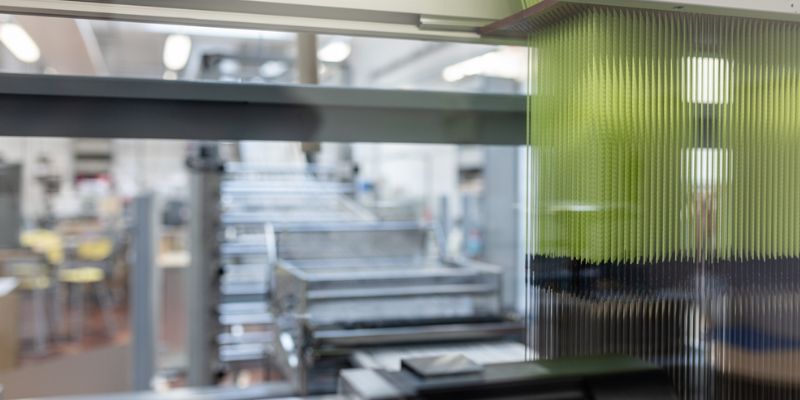
The 3D WIC aims to expand our research in textile technology, by developing advanced 3D woven structure prototypes for a wide range of sectors from fashion, healthcare to aerospace. The Centre has a state-of-the-art jacquard multi-shuttle loom, together with dobby power weaving technologies and CAD handlooms.
Clothworkers’ Centre for Textile Materials Innovation for Healthcare (CCTMIH)
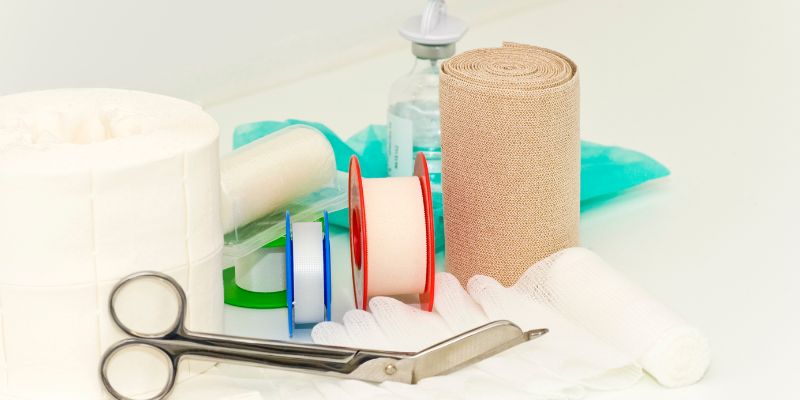
A growing ageing population is increasing the global demand for high quality, cost-effective healthcare products that can be readily accessed by all. New materials, manufacturing processes and finishing technologies are required to support existing and future products that rely on textile materials for their function. Many of these healthcare applications affect millions of people worldwide but significant technical challenges still need to be overcome in terms of product design and engineering.
This Centre is working on developing polymer materials for new clinical procedures, as well as textile materials to improve the performance of existing medical devices.
Visit the Clothworkers’ Centre for Textile Materials Innovation for Healthcare (CCTMIH) website.
Recent Research Outputs
- Fisher G; Bull K; Downing P; Taylor I; Junaid F; Russell S (2026) Extended producer responsibility fees on clothing – would consumers notice? Cleaner and Responsible Consumption, 22, pp. 100446.
- Parra-Saldívar R; Russell SJ; Iqbal HMN; Navarro-Márquez M; Gutiérrez-Soto G; Kumar V; Kumar G; Vanapalli KR; Maity SK (2026) Forgotten fibre waste: Mycoremediation and recycling of used absorbent hygiene products. Resources Conservation and Recycling, 226, pp. 108673.
- Du M; Tronci G; Yang XB; Wood DJ (2026) Extrusion-based three-dimensional bioprinting of osteochondral scaffolds: Strategies using hydrogel/thermoplastic combinations. International Journal of Bioprinting, 12, (3), pp. 026140122.
- Du M; Tronci G; Yang XB; Brooker C; Wood DJ (2026) Citric acid-enhanced chitosan/hyaluronic acid interpenetrating hydrogel network as a bioinspired adhesive for osteochondral scaffold fabrication. Int J Biol Macromol, 373, pp. 153122.
- Du M; Tronci G; Yang XB; Wood DJ (2026) Parameter Optimisation in 3D Extrusion Printing of Polyhydroxybutyrate Using Design of Experiment Methodology. J Funct Biomater, 17, (2), pp. 90.
- Wall PA; Brooker C; Tronci G; Thornton PD (2026) Enzyme-Responsive Porous Scaffolds by Electrospinning Polyalanine. Macromolecular Chemistry and Physics, 227, (2).
- Moorcroft SCT; Calmé B; Brooker C; Valdastri P; Harris R; Russell SJ; Tronci G (2026) Ultrasound-Triggered Release of Anticancer Nanoparticles from Electrospun Fabrics Integrated with Soft Robotic Tentacles. Advanced Nanobiomed Research, 6, (1).
- Guo Y; Morris KE; Sumner M; Taylor M (2025) A framework for measuring physical garment durability. Cleaner and Responsible Consumption, 16, pp. 100245
- Skilbeck OJ; Blackburn RS; Kay P (2025) A review on the biodegradation of textiles in the environment. Environmental Toxicology and Chemistry, pp. vgaf229
- Hetherington K; Tidder A; Tack BJ; Benohoud M; Nowlan D; Zahar A; Li X; Prater D; Zguris JC; Tokle T; Rayner CM; Blackburn RS (2025) Method to analyse and quantify the propensity of hair dyes to desorb from human hair fibre. Heliyon, 11, (12), pp. e43528.
- Glasper MJ; Picerno G; Tausif M; Russell SJ (2025) Beyond a second life: Mechanical recyclability of woven fabrics containing recycled wool. Sustainable Materials and Technologies, 44, pp. e01410.
- Zhang H; Jabbar A; Li A; Wang X; Yang D; Tausif M (2025) Image-based finite element modelling of fibre dynamics in polyester staple spun yarns. Composites Science And Technology, 261, pp. 111036.
- Chen Z; Carter LJ; Banwart SA; Roychoudhry S; Pramanik DD; Kay P (2025) Novel staining–microscopy workflow visualizes microfibers in soil–plant systems: Implications for sustainable agriculture and food safety. Science of The Total Environment, 1003, pp. 180671.
- Wheeldon E; Dennis MR; Mao N; Smith DK (2025) Self-sorting multi-scale materials by self-assembling multi-component nanostructured gels in nonwoven fabrics. Chemical Communications, 61, (57), pp. 10546-10549.
- Masters L; Davie D; Cevallos PJ; Shuttleworth MP; Bara D; Warren J; Dogar M; Kay R (2025) Strategic Layer Reworking using Hybrid Additive Manufacturing for Defect-Free Ceramic Parts. Additive Manufacturing, 102, pp. 104752-104752.
- Morris KE; Joynes A; Summer M; Scott E; Taylor M (2025) Measuring Physical Garment Durability: An assessment of 47 T-shirts. Proceedings of the 6th Product Lifetimes and the Environment Conference (PLATE2025).
- Li Q; Xiao K; Mao N (2024) An investigation of the perceived tactile properties using fabric images, videos, and real fabrics. CEUR Workshop Proceedings (CEUR-WS.org)