
Banning the bonfire, not the binge: What the HABIT project tells us about the EU’s new textile rules
Following new legislation implemented yesterday, 19 July 2026 (at the time of publication), large companies selling clothing, accessories and footwear in the European Union can no longer destroy unsold products as a routine way of managing excess stock.
The change, introduced under the Ecodesign for Sustainable Products Regulation (ESPR), marks an important step towards a more circular textile industry. Every year, millions of garments are manufactured only to be destroyed before they are ever worn. Ending that practice should reduce unnecessary emissions while encouraging businesses to place greater value on the products they produce.

The legislation also shifts attention to what happens next. If fewer unsold garments are destroyed, more will enter collection, resale and recycling systems that are already under considerable strain.
Researchers at the University of Leeds have explored these wider challenges through the Back to Baselines in Circular Fashion & Textiles programme, convened by LITAC as part of the UKRI Circular Fashion and Textiles Network Plus.
One of the programme’s flexible fund research projects was HABIT (Breaking the Fashion Habit: Enabling Consumers to Make Considered Fashion Purchases), led by Ms Edel Moore, Dr. Rafiq Elmansy and Prof. Carmen Santos. The project investigated how purchasing habits contribute to textile waste and examined how behaviour change could support a more circular fashion system.
The European Commission estimates that between 4% and 9% of unsold textiles are incinerated each year, directly generating at least 1 million tonnes of carbon dioxide emissions, while the total carbon footprint of the destroyed textiles could be over 10 million tonnes. The ESPR aims to end this practice by encouraging businesses to improve stock management and prioritise options such as resale, donation, repair and remanufacturing before products become waste. Rather than treating surplus goods as disposable, the regulation encourages companies to keep products and materials in use for as long as possible.
Yet preventing the destruction of unsold stock is only part of the challenge. Across the UK and Europe, organisations responsible for collecting, sorting and processing unwanted clothing are under growing pressure. The volume of textiles entering the market continues to increase while the quality of many garments continues to fall. Lower resale values, rising operating costs and saturated second-hand markets are making it increasingly difficult for charities, collectors and recyclers to manage the flow of unwanted clothing.
Without a reduction in overall production, the waste burden risks being redistributed rather than reduced.
Professor Phil Purnell, Professor of Materials and Structures in the School of Civil Engineering at the University of Leeds, explains:
“The biggest threat to the FTI sector achieving its low-carbon targets is the relentless rise in textile production volume. Since 2019, potential environmental savings achieved by making ‘greener’ textiles have been eclipsed by the growing amount of textiles in the system, leading to a net 10% increase in emissions.
Making products that will just be destroyed without being used adds to this problem. Up to 9% of clothing, that’s over half a million tonnes in the EU alone, is incinerated without ever being sold, and a third of online returns are also destroyed. This is not just an environmental problem, it’s also expensive and eats into profit margins. This new legislation will ban the destruction of unsold clothing, reduce wasteful production and encourage more efficient business models that avoid waste.”
His comments reinforce a central finding emerging across textile sustainability research: improvements in materials, recycling technologies and product design cannot fully offset the environmental impact of continually increasing production.
The ban also forms part of a broader package of reforms across Europe. Extended Producer Responsibility (EPR) schemes are being introduced, requiring producers to contribute to the costs of collecting, sorting and managing textiles at the end of their useful life. For businesses selling into the European market, these changes are likely to influence decisions about product design, inventory management and investment in circular business models. They also provide an important point of reference for UK policymakers considering the future of textile circularity and waste management.
Insights from Ms Edel Moore, Lecturer in Marketing and Consumer Neuroscience, HABIT Project Lead.
The EU’s ban on destroying unsold stock addresses a highly visible symptom of overproduction, but the HABIT project’s findings suggest that it targets the end of the problem rather than the beginning. The more persistent driver of textile waste is not what happens to garments after they are produced but sits further upstream in the relationships between clothing and consumers. From the Habit project we found that for many, clothing occupies a very powerful role in the construction of self and social identity as well as a means to manage emotions, express belonging and communicate a sense of who they are.

Working with young adults from the UK and Europe, we explored the triggers, behaviour and rewards associated with buying loops for online fashion purchases. What emerged was a picture that challenges assumptions about consumer demand. The garment itself is not always the true reward, instead, buying cycles are frequently triggered by boredom, low mood, stress or the desire for social approval. Scrolling through fashion content becomes a habitual process and buying becomes less about needing clothes and more about satisfying a psychological cue.
These buying patterns are reinforced through social media platforms which promote expectations of constant novelty and rewards through identity validation or “likes”.
The rise of garments designed for short-term social media impact, where value is derived from a single moment of visibility rather than longevity, use and reuse, reflects the throwaway consumption behaviours that the ESPR is seeking to address.
The pressure towards constantly refreshed, unrealistic self-presentation is not incidental to overconsumption, it is one of its primary engines and is facilitated by business models which depend on high-volume and low-cost production. In this sense, overproduction is not simply a retail forecasting failure or a supply-chain issue but a deliberate consequence of business strategies that profit from accelerating demand and normalising overconsumption through multiple and frequent purchasing. Encouragingly, the HABIT project showed that these buying patterns could be disrupted. After four weeks of identifying their triggers, routines and rewards through journaling, an awareness workshop and a future-self exercise, participants reduced spending by almost a third and largely eliminated their heaviest purchasing patterns of 10+ items per week.
The key lesson from the research is that behaviour changes when people become aware of the habits and emotional cues driving their consumption, not simply when they are informed of its consequences. It needs to be acknowledged that a disposal figure in a corporate report will not interrupt a scrolling habit, and that consumer-facing response must reach people at the point a trigger fires, not after the fact. If purposefully designed, disclosure could become more than a reporting exercise: it could function as a behavioural intervention.
The role of consumers in a circular textile system
Regulation and new technologies can help reshape the textile system, but they cannot do it alone. The choices people are encouraged to make about buying, wearing, repairing and disposing of clothing remain fundamental to reducing waste. Through projects such as HABIT, researchers are investigating how purchasing habits develop and which interventions can encourage more considered fashion consumption.
Many businesses are already experimenting with resale platforms, rental services, repair schemes and take-back initiatives, while digital technologies are improving traceability across supply chains. Whether these approaches become standard practice will depend on sustained investment, supportive policy and the infrastructure needed to keep textiles in circulation.
Insights from Professor Pammi Sinha, Professor of Fashion Management
The objective of the latest requirement by the Ecodesign for Sustainable Products Regulation (ESPR) to prevent the destruction of unsold apparel, clothing, accessories and footwear is to increase their useful life, while boosting efficiency and circularity. This requirement also encourages companies “to manage their stock more effectively, handle returns, and explore alternatives such as resale, remanufacturing, donations, or reuse.”
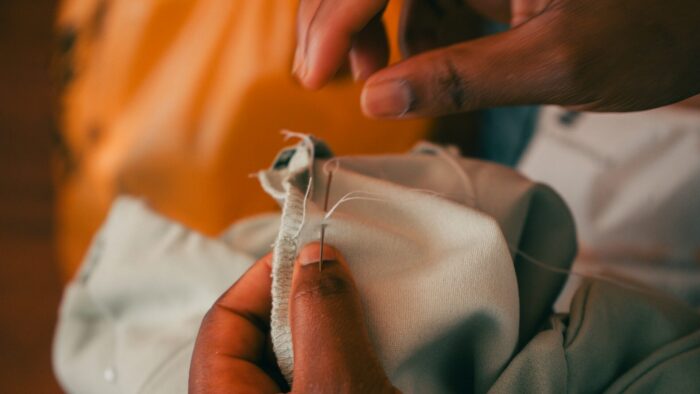
The spectre of increased volumes of apparel and textile is clear as production of new apparel and textile continues coupled with the prevention from destruction of waste or unsold goods. mainstream production.
The case for business models to incorporate remanufacture and the need for consumer behaviour change is stronger than ever. Fashion is a consumer product, not only is the product itself important but so is the need to express ourselves through what we choose to wear. The highly elastic demand for fashion renders forecasting production numbers and stock management highly complex. That overproduction in the fashion industry is an economically viable model is testament to the consumers’ enduring need for change and newness, albeit a need reinforced by these same producers of fashion.
Although a welcome and much needed directive, the latest ESPR requirement still feels like a start to a more sustainable and circular fashion and textile industry raising more questions around bringing about mainstream remanufacture and consumer behaviour change.
Value proposition: while the political debate around a universal definition of waste appears to centre around global trade and economics, how do we as consumers and businesses, manage our relationship with, and value, textile waste? Can we reframe/redefine what textile waste is? How can companies (manufacturers and brands) be supported to develop value propositions or marketing communications that that reframe remanufacture from a good or clever thing to do with textile waste (pre or post consumption) to an emotional investment in heritage, vintage, uniqueness and eschewing prevailing trends?
Design: is paramount to creating desirable products that overcome consumer qualms in purchasing remanufactured, but so are skills and understanding of the relationship between a design, the pattern cutting and fabric handle. New approaches and skills in pattern cutting and coding for industrial lay plans are needed as remanufacture requires utilising fabrics that may not be in a conventional roll. Designers need to be skilled in seeing potentials for new designs within current ones, educators are already developing these skills in their students; how can businesses be encouraged to use these skills in their operations?
Beyond waste prevention: creating value in a circular fashion system
The EU’s ban on destroying unsold clothing sends a clear signal that products should retain their value beyond the point of sale. Preventing the destruction of perfectly usable garments is an important step, but it is only one part of the transition towards a more circular fashion and textile industry.
As Professor Sinha highlights, the regulation raises wider questions about how value is created and maintained within circular systems. Research at LITAC, including the Back to Baselines in Circular Fashion & Textiles programme and the HABIT project, shows that achieving a more sustainable fashion and textile system will require coordinated action across business models, design practice, consumer behaviour and skills, alongside reducing unnecessary production, supporting circular business models, encouraging more considered consumption and developing the infrastructure needed to keep textiles in use for longer.
Together, these approaches offer an opportunity to move beyond simply managing textile waste towards creating a fashion system where products, materials and their value are retained throughout their lifecycle.