
From ITCC 2025 to ITCC 2027: Insights and Future Directions

The inaugural International Textile and Colour Conference 2025 (#ITCC2025), held at the University of Leeds, brought together academics, industry leaders, policymakers, and innovators to explore new pathways toward sustainability in the textile and colour sectors.
The conference garnered significant attention across various media platforms, reflecting its unique positioning at the juxtaposition of academia and the textile and colour industries, with subsequent media coverage including a series of follow-up interviews with select presenters. These interviews further explored salient topics from the conference, such as those relating to decarbonising the textile value chain and sustainable manufacturing practices. Notably, Dr. Nathaniel Crompton, SwitchDye Co-Founder, was amongst those given a dedicated World Textile Information Network (WTiN) feature article which looked at how SwitchDye makes dyeing process more sustainable without compromising on performance, by way of using a cleaner, scalable solution that integrates seamlessly into existing dyeing equipment.
These media and social media engagements underscore the conference’s role in fostering dialogue and collaboration among stakeholders committed to sustainable practices in the textile, colour and fashion industries.
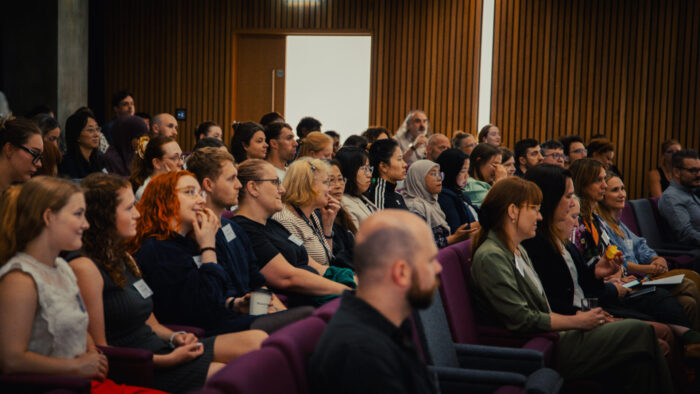
Conference Themes
Across the two days of the conference, delegates examined pressing challenges and groundbreaking developments spanning fibres, yarns, fabrics, garment manufacturing, robotics, coloration, digitalisation, machine learning, and waste management, with a strong focus on circular economies and sustainable futures.
Day one featured thought-provoking sessions on materials and process development, including keynotes on open-loop circularity, and innovation targeting protective and healthcare textiles. The morning industry panel on sustainable fashion and textile manufacturing included contributions from Marks & Spencer, Tailr, John Smedley, and the newly appointed Global Head of Quality Improvement and Assurance at ASOS, and sparked a collaborative solutions-driven discussion on practical solutions for greener supply chains.
Later that morning, colour science took centre stage, with presentations on advances in colour communication, textile perception, and accessibility in design. The afternoon identified industry challenges and sought to propose solutions, highlighting biotechnology for textile waste recycling, virtual prototyping, and advanced textile sorting systems. Day one concluded with sessions on composites and smart textiles, followed by a panel discussion on advanced materials and future fibres.
Day two opened with new insights into coloration technologies, including digital twins, responsive dyes, and workflow innovations for digital supply chains. The subsequent panel on colour and digital technologies brought together leading voices from VeriVide, X-Rite Pantone, and WooltexUK.

Healthcare applications emerged as a prominent theme mid-morning, with cutting-edge research into electrospun cardiovascular fabrics, multifunctional collagen dressings, and antimicrobial fibres. The afternoon focused on circular fashion networks and biobased innovations, including bacterial cellulose leather and pineapple-leaf composites. The conference concluded with a session addressing microplastics, fibre fragmentation, and environmental impact, followed by a final networking reception.
A Broader Picture: Who Spoke and What It Says
A demographic review of speakers and panellists highlighted the sector’s growing diversity and momentum. Industry panels achieved near gender balance (40% women), while academia featured contributions from both senior professors and emerging researchers, ensuring fresh perspectives alongside established expertise. With voices from universities, global brands, innovative start-ups, and technical experts, the programme underscored a shared commitment to sustainability, circularity, and collaboration shaping the future of textiles.
Attendance at the conference reflected a vibrant balance between academia and industry, with around 70% of attendees drawn from universities and research institutes and roughly a quarter representing businesses, NGOs, and professional associations. The programme highlighted voices from an impressive range of international institutions including North Carolina State University and the University of Georgia in the USA, Kaunas University of Technology in Lithuania, Tekirdağ Namık Kemal University in Turkey, and Zhejiang University in China, among many others. Industry and NGO participation was equally diverse, spanning UK heritage manufacturers and retailers such as Marks & Spencer, John Smedley, and AW Hainsworth & Sons, through to innovation-driven enterprises like Alchemie, SEFF Fibre, Tailr, Matoha, and Ananas Anam, alongside global standards organisations such as X-Rite Pantone and repair-focused initiatives like the United Repair Centre. This mix of academic depth and industrial expertise underscored the conference’s spirit of collaboration, demonstrating how international partnerships are essential to tackling the shared challenges of sustainability, innovation, and circularity in the fashion, textile, and colour industries.
The conference’s success also reflects its rich legacy: marking over 150 years since the Yorkshire College of Science laid the foundations for the University of Leeds’ textile and colour science disciplines. Today, that tradition continues through ourselves at LITAC and the School of Design at the University of Leeds.
We extend our heartfelt thanks to our conference partners, VeriVide, Thouslite, and the Network Plus in Circular Fashion and Textiles, whose support and technologies highlighted the practical applications of research and innovation.
Thematic Takeaways
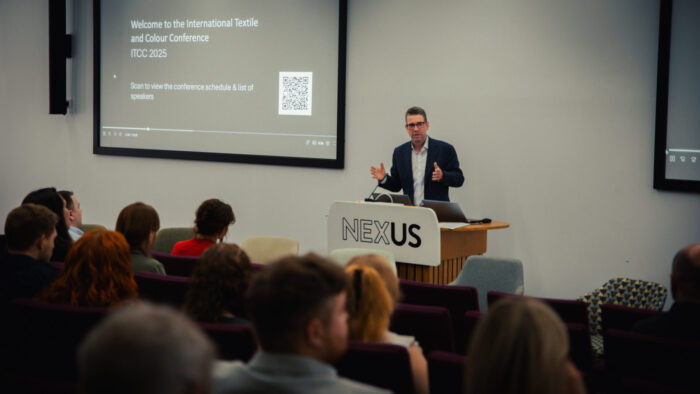
The themes explored at #ITCC2025 are especially pertinent to the UK’s frontier industries, where innovation in advanced materials, digital technologies, and sustainable manufacturing is a major priority. From smart textiles and biobased materials to AI-driven design and circular supply chains, the conference highlighted opportunities for companies and research institutions to lead globally in cutting-edge, environmentally responsible solutions. By bridging academic insight with industrial application, the event showcased how the institutions like LITAC can leverage expertise in textiles and colour science to help drive growth in high-tech manufacturing, healthcare materials, and sustainable consumer products.
#ITCC2025 was more than an academic gathering, it was a decisive step toward reshaping the textile and colour industries for a sustainable future, demonstrating the power of collaboration, innovation, and shared vision in building resilient, responsible, and globally competitive UK industries.
“The conference featured an outstanding lineup of speakers from across the textiles and colour sectors, representing both industry and academia. It was refreshing to experience such a diverse range of presentations, covering topics from medical textiles to the pressing challenges faced by the retail sector. Compared to similar conferences I’ve attended recently, this one offered a refreshing change. The topics and discussions felt genuinely new and insightful, rather than reiterations of familiar themes.” Katharine Beacham, Head of Sustainability in Clothing & Home, Marks & Spencer.
Announcing ITCC 2027
Following the resounding success and overwhelmingly positive feedback from delegates, we are thrilled to announce that the International Textile and Colour Conference will return in 2027.
The second iteration of the International Textile and Colour Conference presents an exciting opportunity to build on the success of the inaugural event. The conference will continue to bring diverse delegates from both the global north and south to explore creative solutions to the practical challenges of sustainable development in textiles and colour. By fostering open discussion and international collaboration, it will unite business leaders, entrepreneurs, and leading academic researchers across environmental science, design, business and economics, science and technology, making #ITCC2027 a uniquely compelling platform for advancing innovation and global interdisciplinary collaboration.