
Powering Fashion Innovation: Research Impact at the University of Leeds
The University of Leeds’ receipt of the Queen Elizabeth Prize for Education marks 150 years of influential textile research and innovation.
LITAC and the School of Design are continuing this tradition advancing textile research into the future, across a broad spectrum, from sustainable textile materials, manufacturing and fashion to multiple facets of technical textiles.
Textile innovation has long been at the heart of Leeds, shaping the city’s economic, social, and cultural landscape. Founded in 1874 with the support of The Clothworkers’ Company, the Department of Textile Industries, soon followed by the Department of Tinctorial Chemistry and Dyeing within the Yorkshire College of Science, became founding disciplines of the University of Leeds. An early focus on technical instruction for the region’s manufacturing industry evolved into cutting edge scientific research, laying the foundations for decades of pioneering achievement, a legacy that continues to inform contemporary research. Collaboration with The Clothworkers’ Company continues today, enabling major developments such as the formation of LITAC, a cross-campus University of Leeds research institute in 2021.
This post is the first in a series of research highlights exploring some of the impact of Leeds’ recent research in textiles and colour. This first post focuses on fashion, highlighting how research can translate into industry-facing innovation to drive sustainability and foster creative problem-solving.
Future Fashion Factory: Shaping Industry Innovation

Future Fashion Factory (FFF) is an industry-led research and innovation initiative, underpinned by a £6.1 million investment, to enhance the agility, sustainability, and global competitiveness of the UK’s fashion and textile industry. With the financial support of the Arts and Humanities Research Council (AHRC) collaboration between several HEIs including, the Universities of Leeds, Huddersfield, Manchester Metropolitan University (MMU) and the Royal College of Art (RCA) was harnessed to support the innovation goals of numerous SMEs.
One example is Ponda Ltd, a start-up company dedicated to reimagining fibrous insulation materials for the fashion industry. Ponda’s collaboration with FFF was motivated by a desire to develop a renewable source of fibre capable of restoring existing ecosystems and habitats rather than depleting them. To explore this, Ponda joined forces with Professor Stephen Russell, Dr. Mark Taylor, and Dr. Ioana Taylor of the University of Leeds to evaluate the physical properties of fibres extracted from specific plants cultivated on revitalised wetlands, together with manufacturing processes capable of yielding industrially viable thermal insulation materials. Today, Ponda Ltd. operates from a pilot-scale facility in Bristol, where they process, blend, and prepare the fibre to meet industry standards, having raised £3m+ investment since their inception. Their BioPuff® fibre has been used in garments made by brands such as Berghaus, Stella McCartney, Parley for the Oceans, and Sheep Inc. While Ponda’s initial focus has been in apparel, prospects for its use in home textiles, bedding, upholstery, and other soft goods is also being explored.
From the beginning, FFF prioritised close collaboration with industry. Businesses played a key role in shaping research priorities, while industry representatives provided guidance through the Steering Group and Programme Management Groups, ensuring the programme remains both relevant and impactful. Engagement with national sector bodies, including the UK Fashion and Textile Association (UKFT) and the British Fashion Council (BFC), ensured that the programme addressed real-world challenges.
Whichever way you look at FFF it has been an outstanding success… it has driven a horse and cart through the idea that universities do not work to support industry.
Adam Mansell, CEO of UKFT.
The Future Fashion Factory community continues to highlight the value of long-term collaboration, demonstrating how industry partners can work with University of Leeds researchers to shape the future of fashion and textiles.
Network Plus in Circular Fashion and Textiles: Progress towards Circularity
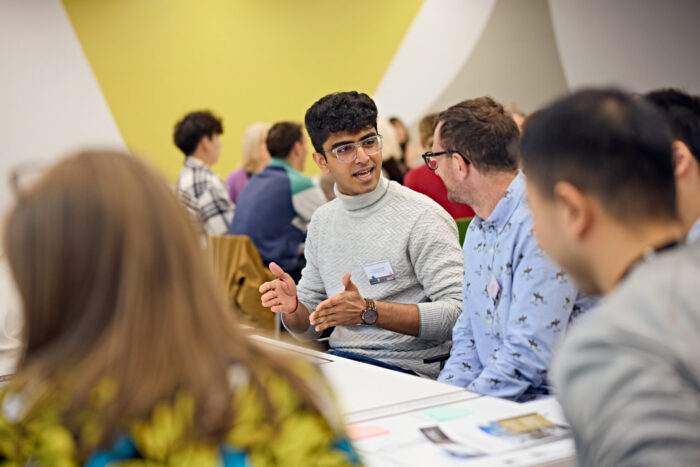
In 2023, LITAC launched the Back to Baselines (B2B) in Circular Fashion and Textiles initiative to provide a data-driven picture of the industry’s real-world progress towards circularity. This forms part of NERC’s Network Plus in Circular Fashion and Textiles programme, which together with IMPACT+, led by Northumbria University and Future Fibres Network+ led by the University of Exeter aims to deliver data-driven insights, innovative methods and practical interventions to accelerate the adoption of circular business models. The Programme Coordination Team, convened by LITAC ensures the sub-networks operate in concert, building a robust knowledge base to support sustainability goals. IMPACT+ is improving the collation, analysis, and assessment of environmental impact measures and Future Fibres Network+ is embedding environmental sciences at the heart of fashion, apparel, and textile sectors.
IMPACT+ has also worked with UKFT to develop the Care & Repair Guide, which advances sustainability by to activating skills in garment maintenance, repair, renovation, and renewal. A follow-up project is now seeking to embed garment management practices across the value chain, using the guide as a tool. Meanwhile, Future Fibres Network+ has collaborated with a diverse range of partners to advance innovation; one such project with Ananas Anam has seen the development of next-generation textiles from waste pineapple leaves, enhancing fibre properties for demanding applications while promoting sustainable material innovation.
Among its applied policy-focused projects, Back to Baselines has supported research on Visible EPR fees on clothing, delivered by WEFT and funded through University of Leeds. This work investigated consumer tolerance for visible Extended Producer Responsibility (EPR) charges on garments, identifying acceptance thresholds and the price points at which such fees begin to influence purchasing decisions. By grounding EPR design in robust shopper research, the project provides policymakers and industry with an evidence-based foundation for developing effective EPR schemes that are both publicly acceptable and capable of driving behavioural change in support of a more circular textile system.
Through these initiatives, while still ongoing, the Network Plus demonstrates how collaborative research is pivotal in creating scalable solutions, combining technology, sustainability, and scientific innovation to support a more circular and resilient UK fashion sector.
Given the scale and complexity of the environmental challenges facing the fashion and textile industry, an honest picture of the current baseline position and the challenges ahead are essential. Through the Network Plus, we’ve evaluated progress on multiple fronts and forged new research collaborations to address some of the most important evidence and data gaps.
Professor Stephen Russell, convenor of the Network Plus and Director of LITAC.
Advancing Clothing Durability: The LITAC Durability Research Project
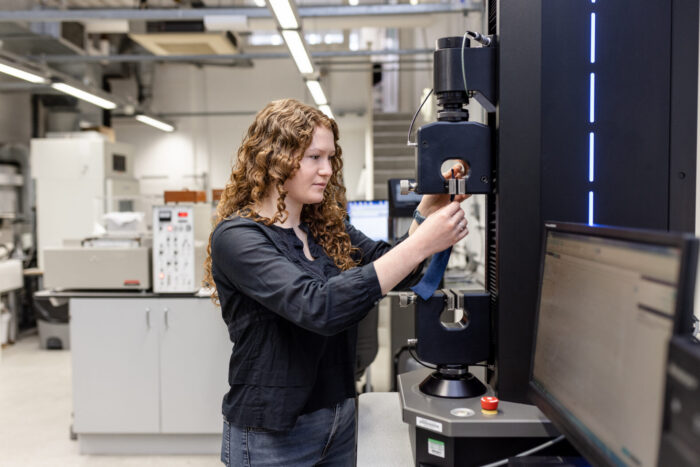
In 2025, the LITAC Durability Research Project concluded a three-year investigation into clothing durability, in partnership with Waste & Resources Action Programme (WRAP) and supported by brands and retailers. The research was supported by a PhD researcher, Kate Baker, with additional investment from WRAP. Notably, the project built on WRAP’s 2014 Clothing Longevity Protocol, updating guidance for assessing garment durability and defining minimum standards across the industry.
A major outcome of the project was the creation of industry-first, product-specific durability benchmarks, enabling businesses to design longer-lasting garments, integrate products into circular business models such as rental and resale, compare durability against market standards, and communicate product longevity to consumers. Beyond individual products, the research informs the circular design workstream of WRAP’s UK Textiles Pact and contributes to the Circularity Roadmap, supporting a more sustainable future for the UK fashion industry.
Building the Next Generation of Fashion Innovation

The School of Design’s research is underpinned by extensive, state-of-the-art textile manufacturing and scientific laboratory facilities, as well as nationally significant archives, including the Yorkshire Fashion Archive, the International Textile Collection, and the M&S Company Archive. These facilities also support teaching programmes such as the BSc in Textile Innovation and Sustainability, MSc Textile Sustainability and Innovation, BA Sustainable Fashion, and the BA in Fashion Design Innovation.
These resources, coupled with interdisciplinary academic expertise are the foundation of the School’s innovative research and facilitate the creative endeavours of both students and staff. Pioneering work advances knowledge empowers researchers and informs future industry leaders. By providing today’s students with advanced technical skills, specialist expertise and access to high quality facilities and data, future innovation and decision-making in relation to sustainable development in the fashion and textile industry will be properly informed.