
School of Design Joins AUTOLOOP to Boost Circular Innovation in Europe’s Textiles
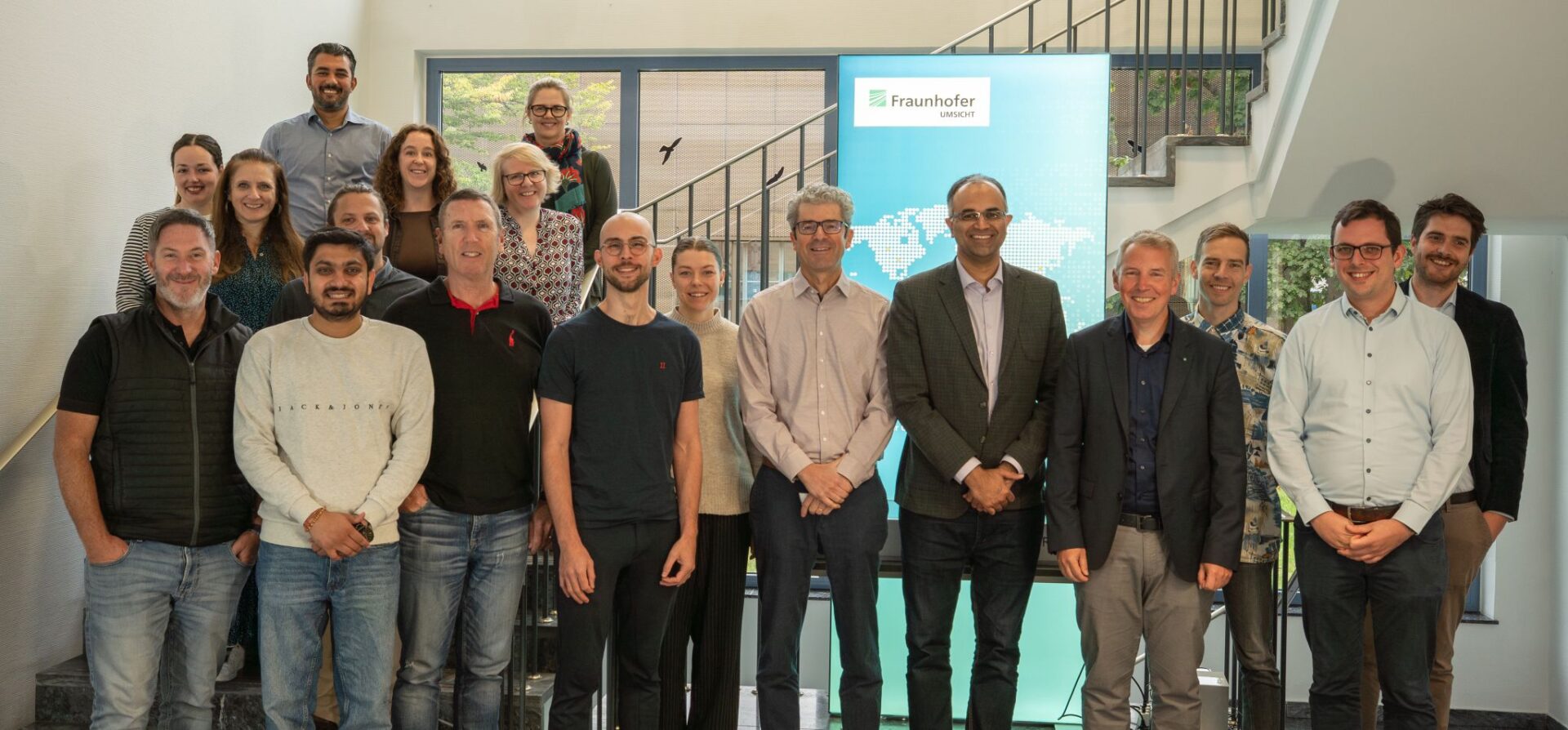
The School of Design at the University of Leeds is thrilled to be a partner in the groundbreaking AUTOLOOP project, contributing its world-class expertise in textiles and circular economy research.
The university’s role will be led by Principal Investigator Professor Muhammad Tausif, together with Co-Investigators Professor Stephen Russell, Director of the Leeds Institute of Textiles and Colours (LITAC), and Professor Ningtao Mao. Their combined expertise in fibre science, recycling technologies, and sustainable manufacturing will strengthen the project’s ambition to create a new generation of circular solutions for the textile industry.
Professor Muhammad Tausif, University of Leeds, Principal Investigator on the AUTOLOOP project added: “We are proud to contribute our research excellence and innovation capacity to AUTOLOOP. This project represents a vital step towards building a truly circular textile economy in Europe, and we are excited to work alongside leading partners to create technologies that will have lasting environmental and societal impact.”
Introducing the AUTOLOOP Project
According to Euratex, 2024, Europe consumes around 12 million tonnes of textiles each year, while 10.9 million tonnes of post-consumer textile waste are generated annually. Today, less than 1% of this waste is recycled in closed-loop systems, with most ending up in landfills or incineration.
The new AUTOLOOP project, launched 1 September 2025, is coordinated by Fraunhofer UMSICHT alongside 13 partners from across Europe, sets out to address this challenge by building a next-generation circular textile system. AUTOLOOP will develop scalable technologies for:
- AI-powered automated sorting with higher precision and reduced labour dependence.
- Advanced chemical recycling of non-rewearable textiles (NRT), resistant to pollutants and legacy chemicals.
- Science-based additive tracing to ensure material identification across the lifecycle.
- A Textile Data Hub compatible with the EU’s Digital Product Passport, enabling transparency, interoperability, and accessibility across the value chain.
AUTOLOOP will raise these technologies from TRL 3 to TRL 5 (Technology Readiness Levels (TRL) are a type of measurement system used to assess the maturity level of a particular technology), therefore better validating the closed-loop system in operational conditions.
Impact by 2050: Vision and Outcomes
By 2050, the project’s vision is to process 1.24 million tonnes of post-consumer textiles annually, achieving a 96% material recovery rate. This could produce hundreds of thousands of tonnes of regenerated fibres, including Lyocell, polyester, and polyamide, while also saving an estimated 12.5 billion m³ of water, 4.5 TWh of energy, and 450,000 hectares of land.
In addition to its innovative recycling technologies, AUTOLOOP will emphasise seamless process integration and digital traceability throughout the value chain. By leveraging intelligent data passport systems, each batch of recycled fibre and polymer will be documented from collection to final product, ensuring full transparency and compliance with emerging EU standards. The interoperability of these digital systems will simplify regulatory reporting and foster trust among stakeholders, from manufacturers to end-users.
Scientific additive tracing methods will be used to monitor the flow of materials, identify residual contaminants, and certify the purity of recovered monomers and fibres. This approach not only guarantees the mechanical performance and safety of recycled textiles but also enables rapid scalability across diverse textile streams.
The collaborative nature of AUTOLOOP, drawing expertise from international partners in research, industry, and technology development, ensures a robust framework for industrial validation. Pilot plants, such as the ReSyn demonstration unit, will serve as testbeds for process optimisation, energy integration, and real-world application. The feedback from these pilots will inform continuous improvement, with the aim of transitioning from pilot-scale to full commercial deployment by 2050.
Through its focus on advanced recycling, digital traceability, and sustainable process design, AUTOLOOP is poised to help transform the European textile industry. By enabling circular flows for both cellulosic and synthetic fibres, the project will set new benchmarks for material recovery, resource efficiency, and environmental stewardship, laying the foundation for a climate-neutral, resilient textile sector.
A Partnership between Sectors
Beyond the environmental benefits, AUTOLOOP will contribute to strengthening Europe’s technological leadership, fostering innovation-driven business models, and creating sustainable jobs in a rapidly evolving sector. Its exploitation strategy includes engaging industrial stakeholders and potential investors to accelerate commercial deployment through a spin-off model, with plans to move towards TRL 7–8 demonstration projects.
The consortium brings together expertise from research, technology development, recycling, manufacturing, and digital solutions. Partners include LGI Sustainable Innovation, Zori Tex Ltd, VTT Technical Research Centre of Finland, AALTO University, SKZ Das Kunststoff-Zentrum, University of Leeds, Stuff4Life Ltd, Tailorlux GmbH, TEXroad Foundation, NORION Consult, Temas Solutions GmbH (associated partner), East London Textiles Ltd, and Trasborg Denmark.
As part of this consortium through the School of Design at the University of Leeds, LITAC is thrilled to be part of the AUTOLOOP project, where we will add world-class expertise in textile science to help ensure that the project’s innovations are grounded in robust research.
AUTOLOOP aligns closely with the EU Strategy for Sustainable and Circular Textiles, contributing to the European Green Deal, the Circular Economy Action Plan, and zero pollution targets. With innovation at its core, AUTOLOOP represents a decisive step towards closing the textile loop, reducing environmental impacts, and building a resilient, resource-independent European textile industry.